If you are looking for apartments near Bardin Road with no guest parking permits, Villas at Bardin is a straightforward match on that specific point: the community does not issue guest parking permits, guest vehicle registration is not required, and guest parking passes do not need renewal because there are no passes to renew. For renters who regularly host friends, relatives, or caregivers, that removes one of the most common apartment hassles, but it also makes it important to understand exactly where guests may park and what other parking rules still apply.
What “no guest parking permits” really means here
At many apartment communities, “guest parking” still comes with an approval step, such as a paper pass, online registration, time limit, or license-plate entry. At Villas at Bardin, the published policy is simpler than that. Guests do not need a permit, and residents do not need to register a guest vehicle before a short visit.
That simplicity matters most if you host people on irregular schedules. If a family member stops by for dinner, a friend visits on short notice, or someone arrives while the leasing office is closed, the lack of a permit system can reduce friction. It also helps avoid the common problem of a guest forgetting to display a pass or entering the wrong vehicle information.
It is still important not to confuse “no permits” with “park anywhere.” The community states that guests should park behind the resident’s attached garage or along the off-street parking areas, and guests should use designated areas to avoid violations or towing. In other words, the benefit is less paperwork, not the absence of parking rules.
Another practical point is duration. The community states there are no specific restrictions on guest parking duration, but guests must follow the parking policy and use designated guest areas. If you expect a longer visit, that is still worth clarifying in advance, especially if your guest will leave a vehicle parked for several days while you are both coming and going.
How the parking setup affects real-life hosting
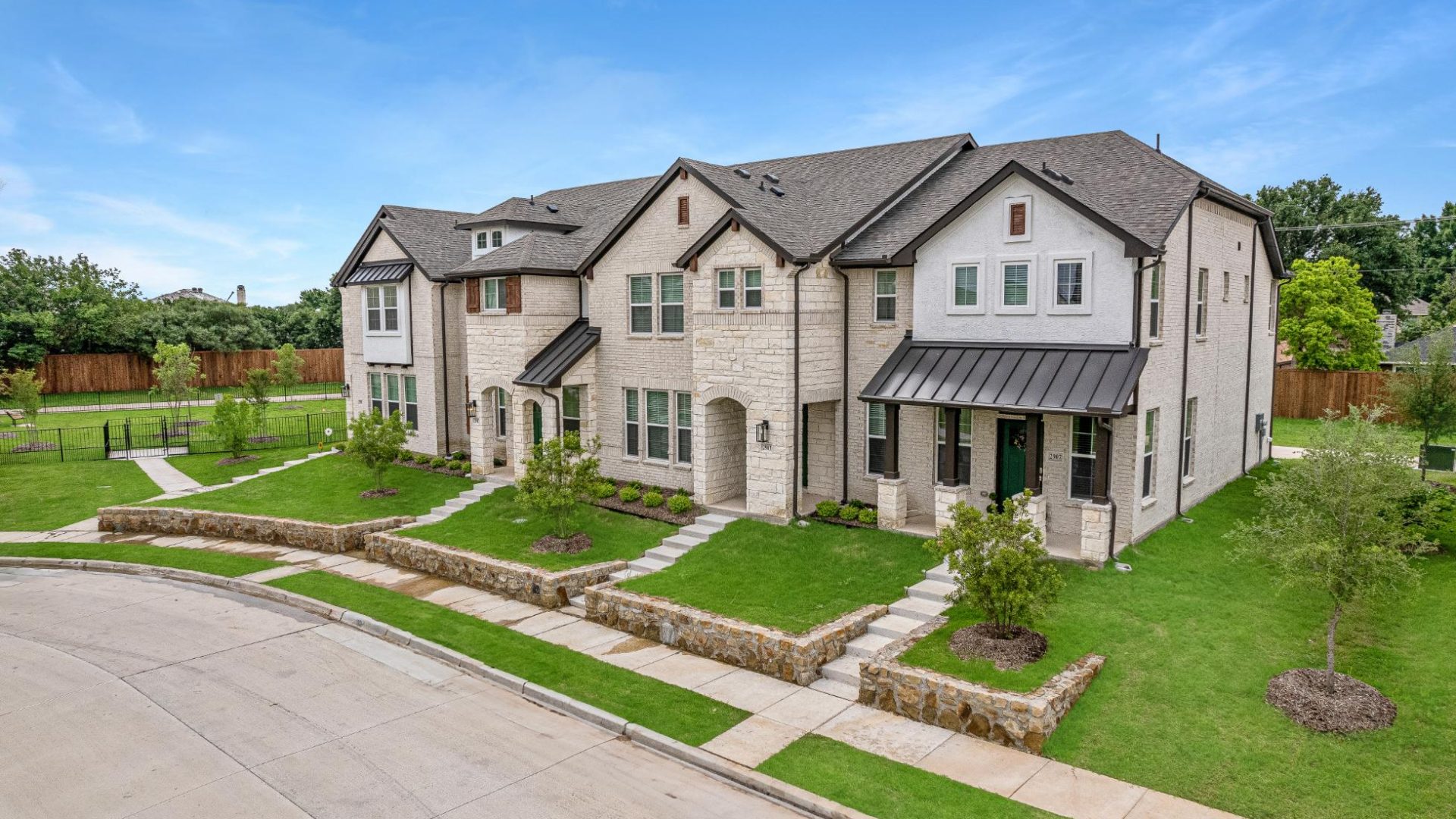
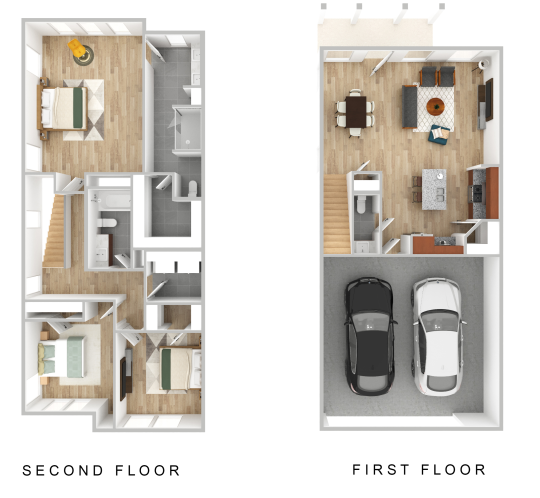
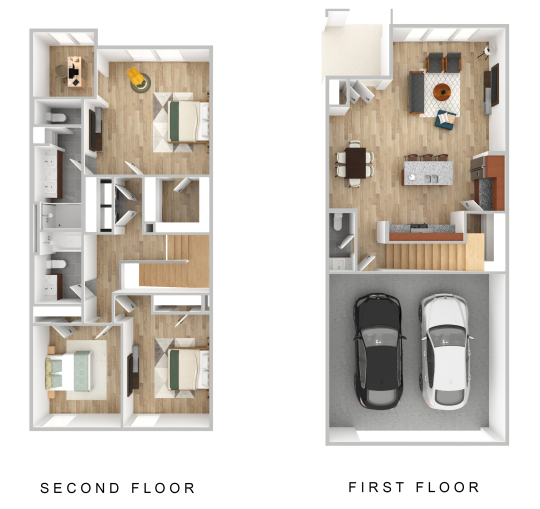
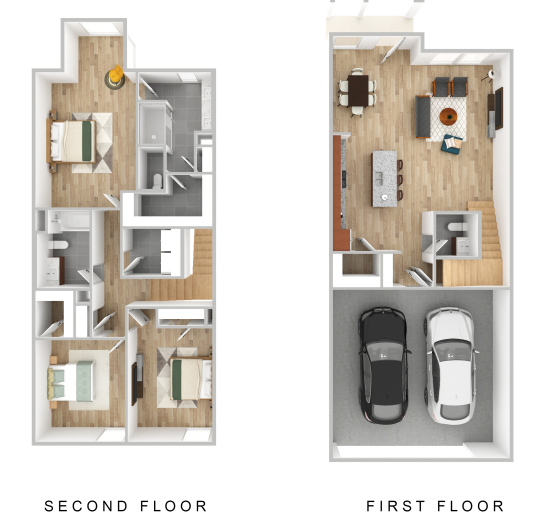
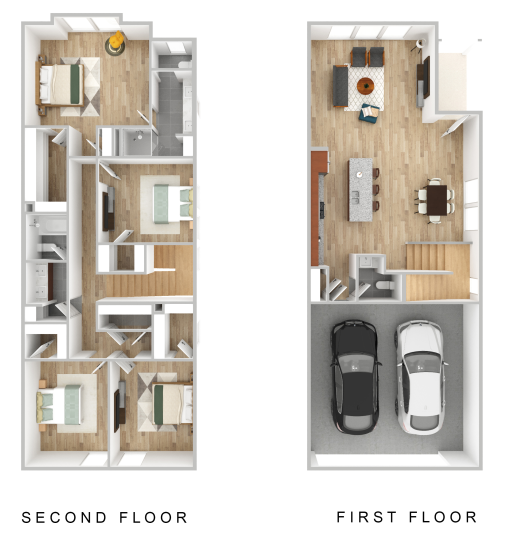
One detail that meaningfully changes the parking equation is that each townhome includes a 2-car attached garage. That gives residents a built-in place for their own vehicles, which can reduce competition between resident and guest parking compared with communities where everyone relies on a shared surface lot. If your household normally uses the garage, the off-street guest areas may be easier for visitors to access without displacing your own cars.
The community also states that guests may park behind the resident’s attached garage. For some households, that is the easiest option because it keeps the guest car close to the unit and avoids any confusion about where visitor spaces begin or end. If you host older relatives, families with small children, or people carrying items in and out, that nearby option may matter more than a permit-free policy by itself.
There is also a useful trade-off to understand. Because there are no assigned parking spots in the community, a renter who wants highly structured parking may want to ask very specific questions before leasing. A permit-free guest system is often easier for casual visitors, but some renters prefer a community where guest spaces are tightly controlled. Neither approach is automatically better, it depends on how often you host and how much predictability you want.
Towing enforcement is another reason to pay attention to the details. The community states that towing can be enforced at any time at the request of the leasing office, and after office hours towing may be enforced for parking or lease violations. That does not conflict with the no-permit policy, but it does mean guests should park carefully in approved areas rather than assuming the absence of permits means total flexibility.
What to verify before you lease if guest parking is a deciding factor
If guest parking is one of your top priorities, the most useful next step is to ask the leasing team to physically point out where guests park during a tour. Seeing the off-street areas and the space behind a garage is more useful than hearing a general policy summary. It lets you judge whether the layout works for the size of gatherings you actually host.
You should also ask how the policy works for your specific household pattern. For example, occasional dinner guests, a partner who visits several nights a week, and out-of-town family staying close to the 7-day guest-stay limit can all create different parking needs. The written policy gives a good baseline, but your real question is whether the setup fits the way you live.
If anyone in your household drives a work or commercial vehicle, verify that separately. The community states that work or commercial vehicles are not permitted to be registered or parked on the property in addition to personal vehicles. That is not a guest-permit issue, but it can affect renters who host someone arriving in a company-marked vehicle or who personally rely on one for work.
Finally, keep the overall decision in proportion. If your search started with guest parking and little else, Villas at Bardin gives a clear answer on that one issue: there are no guest parking permits, and every townhome includes a 2-car attached garage. If that combination sounds close to what you need, a practical next step is to call the leasing office and ask for a tour focused specifically on where guests park and how the policy is enforced day to day.